Youth-centered, collaborative, solutions-oriented
- What’s it like for teens to grow up with today’s tech?
- What are teens facing that adults are missing?
- What do teens most wish adults understood?
For over a decade, our founders have been listening to thousands of youth to answer these questions. In short, we have found that there is a lot that adults are missing about the digital lives of young people. This is why we advocate asking more questions and doing more listening.
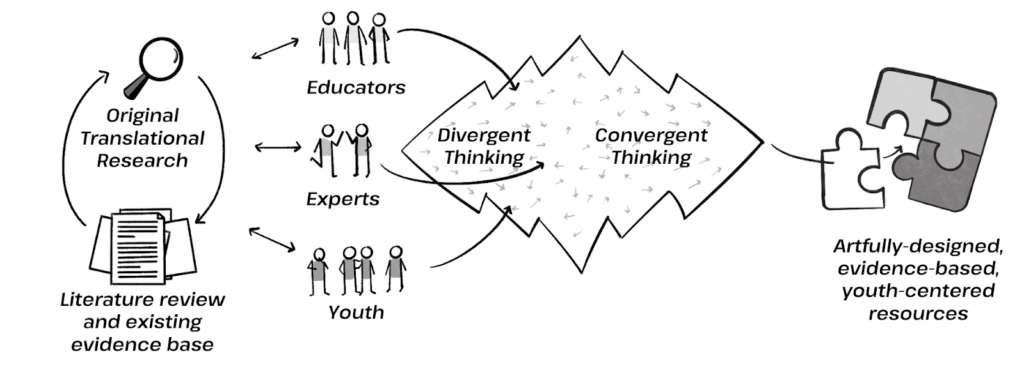
We understand more when we ask (rather than assume), listen (while suspending judgment), imagine new directions (together), then synthesize, assess, and iterate.
Our research is youth-centered.
We take inspiration from the founding idea of the Disability Rights movement: nothing about us, without us.
As we imagine and design interventions to realize digital thriving, we need youth voices guiding, informing, and directing us. We strive to embrace co-design with youth from different contexts, backgrounds, and identities. We need to pay special attention to the perspectives of youth with distinct strengths and vulnerabilities, including histories of marginalization. We are aiming for a “design for the margins first” approach.
We believe that disciplinary expertise and existing evidence are hugely valuable, too. In our research and design work, we take guidance from advisory councils that inform and shape what we do (youth advisory especially). This results in translational research, which is research that can directly benefit people and be used in real-world practice.
Our research is collaborative and solutions-oriented.
We practice participatory design which means that research participants become partners and drivers in our research and design process. For us, this means that we include youth, educators, and clinicians at every step. The illustration below shows how our research, connections to literature, and co-design processes are all linked and part of resource creation.
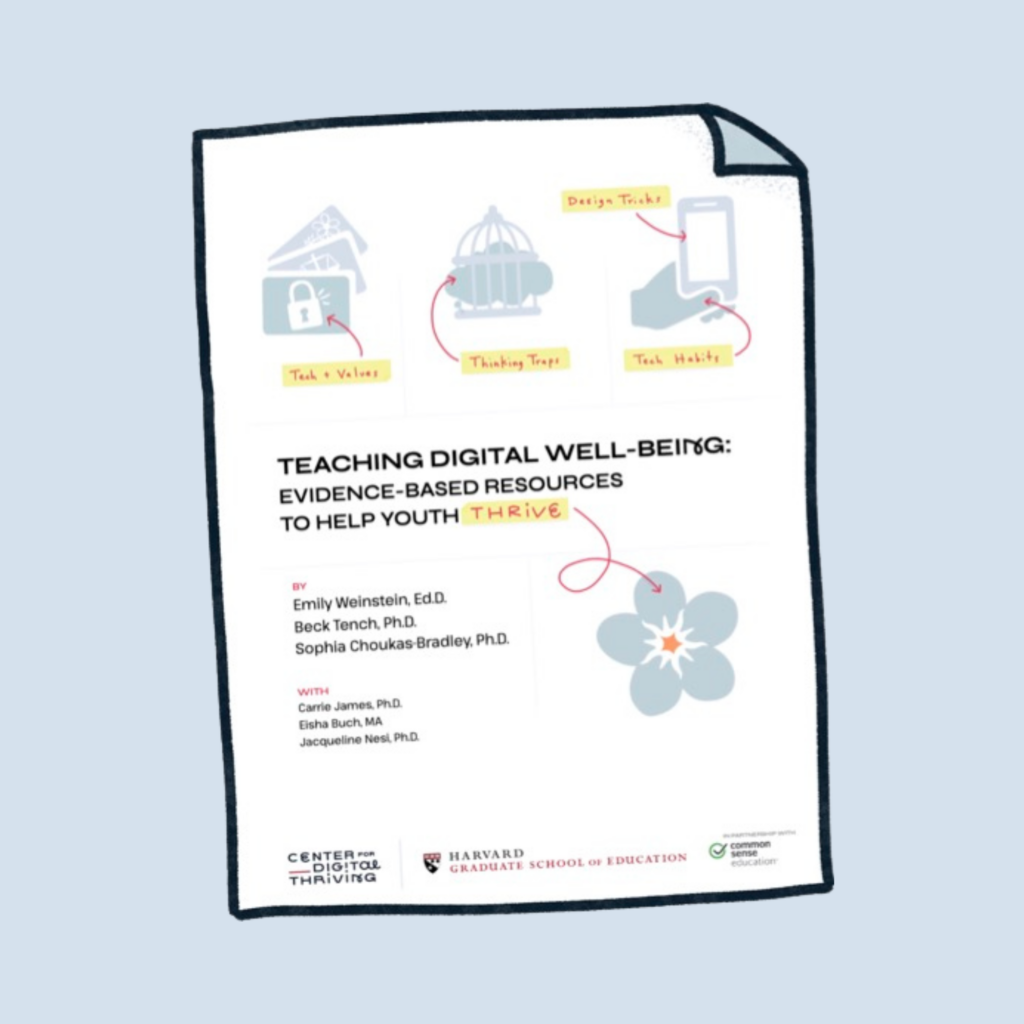
TEACHING DIGITAL WELL-BEING:
EVIDENCED-BASED RESOURCES TO HELP YOUTH THRIVE
To learn more about our research approach, read our report on teaching digital well-being and explore our ever growing and evolving collection of resources.
REPORTS + INSIGHTS
Developed in collaboration with Hopelab, this research memo shares why and how teens are turning to AI for emotional support, sometimes instead of a human.

Hear directly from our youth advisors about how AI is showing up in their lives — from school and mental health to fashion, friendship, and beyond.

Developed in collaboration with Hopelab and Common Sense Media, this report explores what teens want adults to know about how they’re using generative AI.
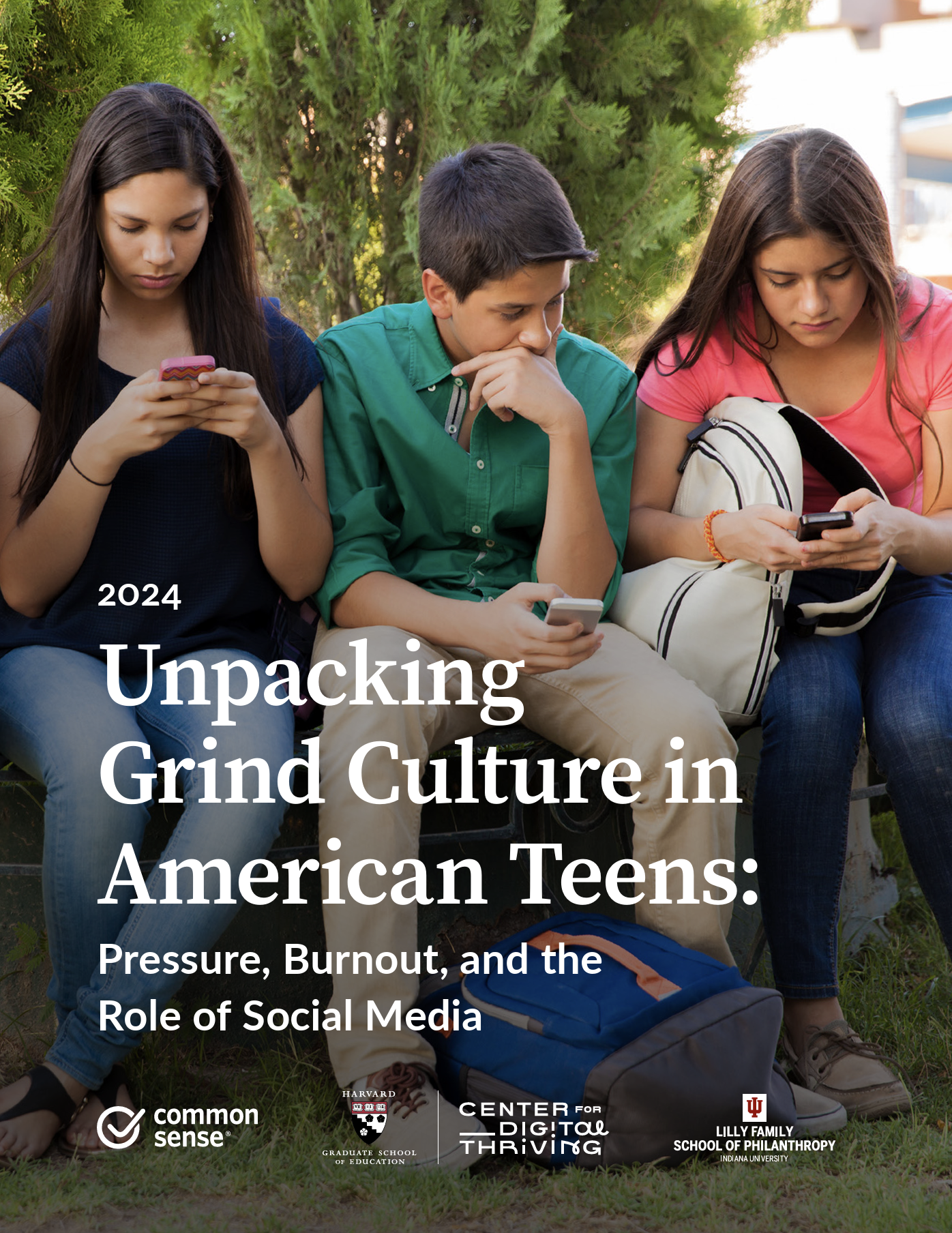
Explore Unpacking Grind Culture in American Teens: Pressure, Burnout, and the Role of Social Media to learn about the pressures teens face, how burnout affects them, and what adults can do to help.

Dr. Emily Weinstein shares how adults often miss hidden signals of teens’ digital interactions — and how to meet teens with empathy over eye rolling.
University of Birmingham’s Vicky Goodyear and CDT’s Carrie James discuss research on school phone bans and the challenges and limits of keeping phones out of the classroom.

Dr. Emily Weinstein joins the TODAY Show to share findings from The Grind Study and encourages adults to widen their lens on social media’s impact
Behind Their Screens:
What Teens Are Facing
(and Adults Are Missing)
Read what CDT Co-founders Dr. Emily Weinstein and Dr. Carrie James learned from more than 3,500 teens by asking: what do you most wish adults understood about your digital lives?